China Syndrome
First, close eleven plants in the U.S., then open eleven in Mexico where you pay the workers 70¢ an hour. Then use the money you’ve saved building cars in Mexico to take over other companies — preferably high tech firms and weapons manufacturers. Next, tell the union you’re broke and they happily agree to give back a couple billion dollars in wage cuts. You then take that money from the workers and eliminate their jobs by building more foreign factories. Roger Smith was a true genius.
– Michael Moore, 1989
Roger Smith was Chairman and CEO of General Motors. He took over in 1981, and as Wikipedia describes it, GM’s “reputation had been tarnished by lawsuits, persistent quality problems, bad labor relations, public protests over the installation of Chevrolet engines in Oldsmobiles…” GM was “losing market share to foreign automakers for the first time.”
In the 1970s, American cars were becoming the butt of jokes. They were famous for poor economy, for high-priced ‘premium’ models built on the same chassis as the economy model, for coming off assembly lines as though slapped together in a last-minute mad dash, with left-behind tools rattling inside doors, oddly-shaped gaps between body panels, and trunks that wouldn’t stay closed. And it wasn’t just GM. This was an industry whose history of innovation included rocket fins rising above tail lights and yards of unused space beneath pointlessly extended hoods, exercises in empty show that were supposed to constitute ‘style’. And it was an accepted truth that ‘style’, plus marketing, were all that mattered.
In truth, some people liked this sort of thing, and still do. But it’s also true that Roger Smith inherited a gigantic mess at GM.
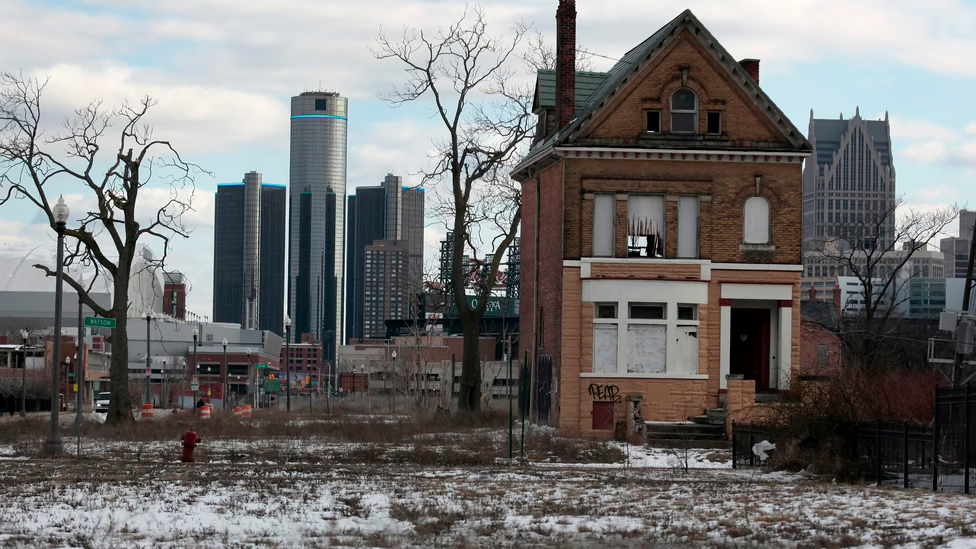
He tried many ways to turn his company around, including forming the new Saturn division with its own independent factory in Tennessee. But Michael Moore’s film of 1989, Roger and Me, forever chained Smith’s reputation to plant closings, layoffs, and the transformation of America’s once mighty industrial heartland into a dystopian Rust Belt of empty factories and abandoned neighborhoods.
But Roger Smith didn’t create the Rust Belt.
The effects of deindustrialization were apparent long before the wreck of Flint, Michigan. The term ‘Rust Belt’ was coined during the presidential campaign of 1984, after hundreds of thousands of industrial jobs had already disappeared from the heavily unionized northern steel belt, only to reappear in the much more business-friendly Sunbelt, where taxes were low and unions practically illegal; and then in even cheaper places, like Mexico, Malaysia, Bangladesh – and eventually China. Manufacturers picked up sticks whenever a new destination beckoned with cheaper labor.
This is an old story, as old as Aesop’s Fables. Yet politicians still manage today to summon the mob with pitchforks and torches by pointing an accusing finger and braying about China ‘stealing our jobs’.
What China did was to offer an army of cheap labor recruited from the hinterland and desperate for wages. What Western manufacturers did was to fall over each other packing up factories and shipping machines, technology, know-how – and jobs – to cheaper shores, just as fast as they could get in.
What else would they do? Business is business.
Aha! one might think. That’s what’s wrong with globalization! It’s why we need tariffs. It’s why we need to restrict trade.
Think again.
There are many ways to reduce labor costs. Start with this:
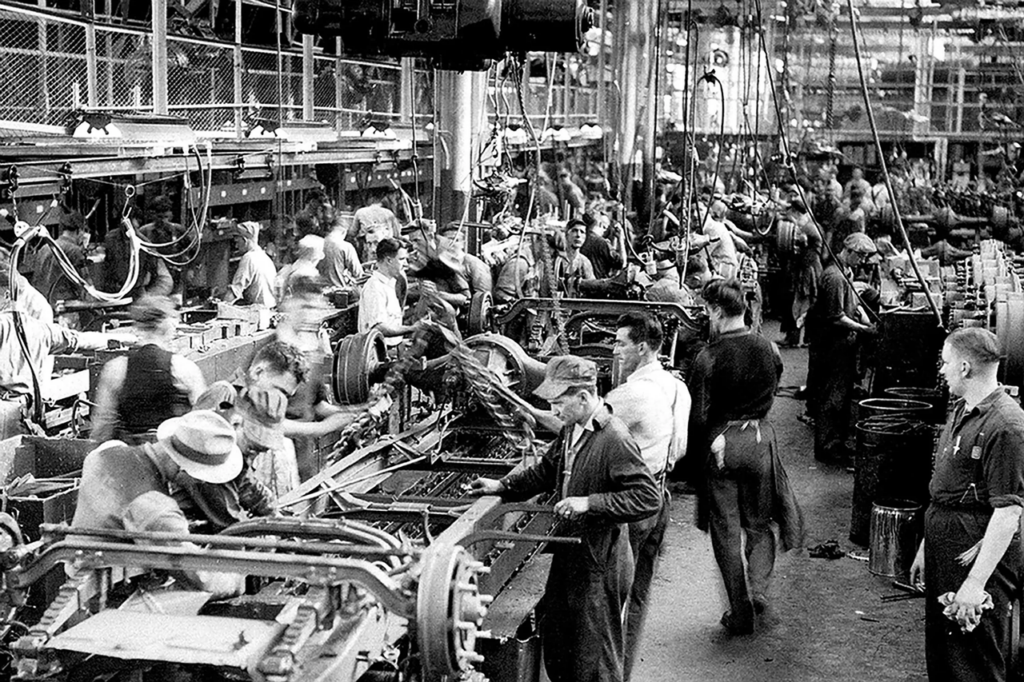
and watch it become this:
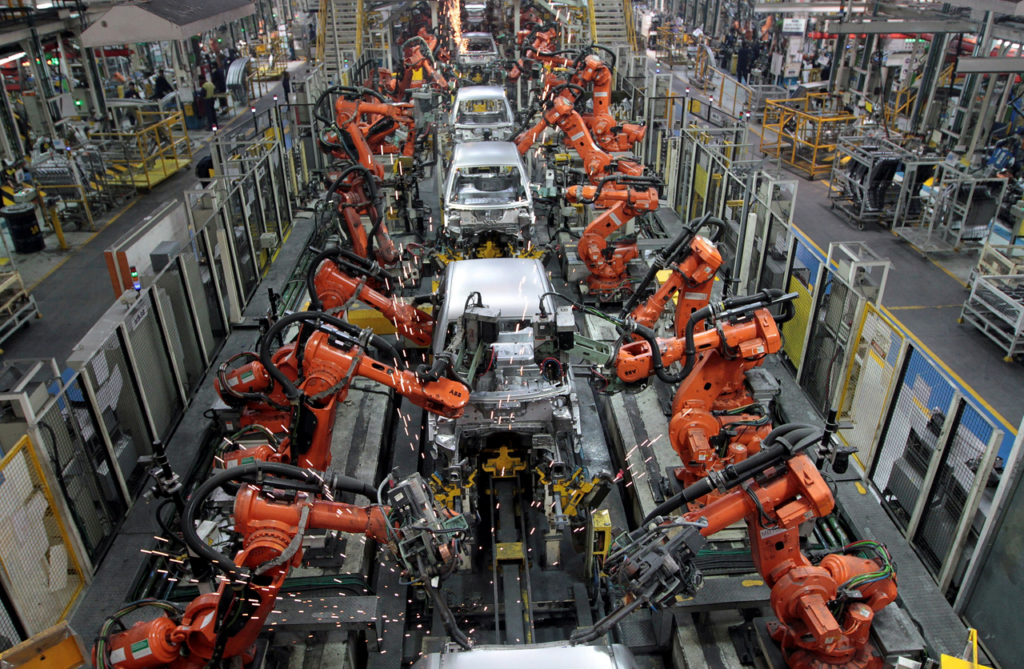
And this:
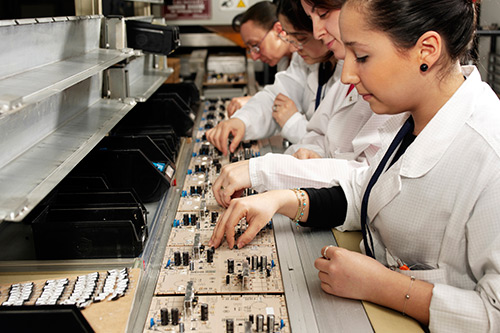
becomes this:
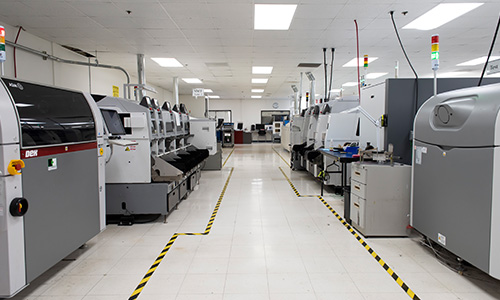
Machines have never been known to unionize. They don’t complain, they don’t walk out, and no one cares about their work-life balance.
Those jobs that were ‘stolen’ by China? They were sent away. And if they hadn’t been, they would have been eliminated, automated, consolidated, cost-reduced out of existence. Because that’s how things work. And in the long-enough run, we’re all better off for it.
Now, creative destruction is still destruction. There is still fallout: layoffs, poverty, human obsolescence. Those are hard problems to solve. And it’s tempting to say that we have a choice: We can choose to face the hard problems, or we can choose to rah-rah politicians who excoriate foreign devils and promise to get tough.
It would be tempting, but it would be wrong. Or at least misleading. Because Western governments – and their voters – are not known for stepping up to face hard problems. Political consultants grow rich instructing candidates on how to weed out complicated ideas and run on simple, emotional messages. Morning in America. Read my lips. They’re stealing our jobs. We want our country back. Politicians are convinced that you don’t win with complicated ideas. And if you don’t win, you’re irrelevant.
There is no reason anyone should expect this to change. At least, not without something truly disruptive happening. The Second World War, for example, was pretty effective at disrupting the economic malaise that was the Great Depression. The politics of sanctimony and obstruction were swept aside for a time. But that kind of disruption is not something many people wish for.
So it would be naive to say that we can simply choose to tackle the hard problems. We won’t. But we do have a choice: We can choose not to be deluded about where the problems come from.
That isn’t much. But it’s not nothing.




About The Author
